


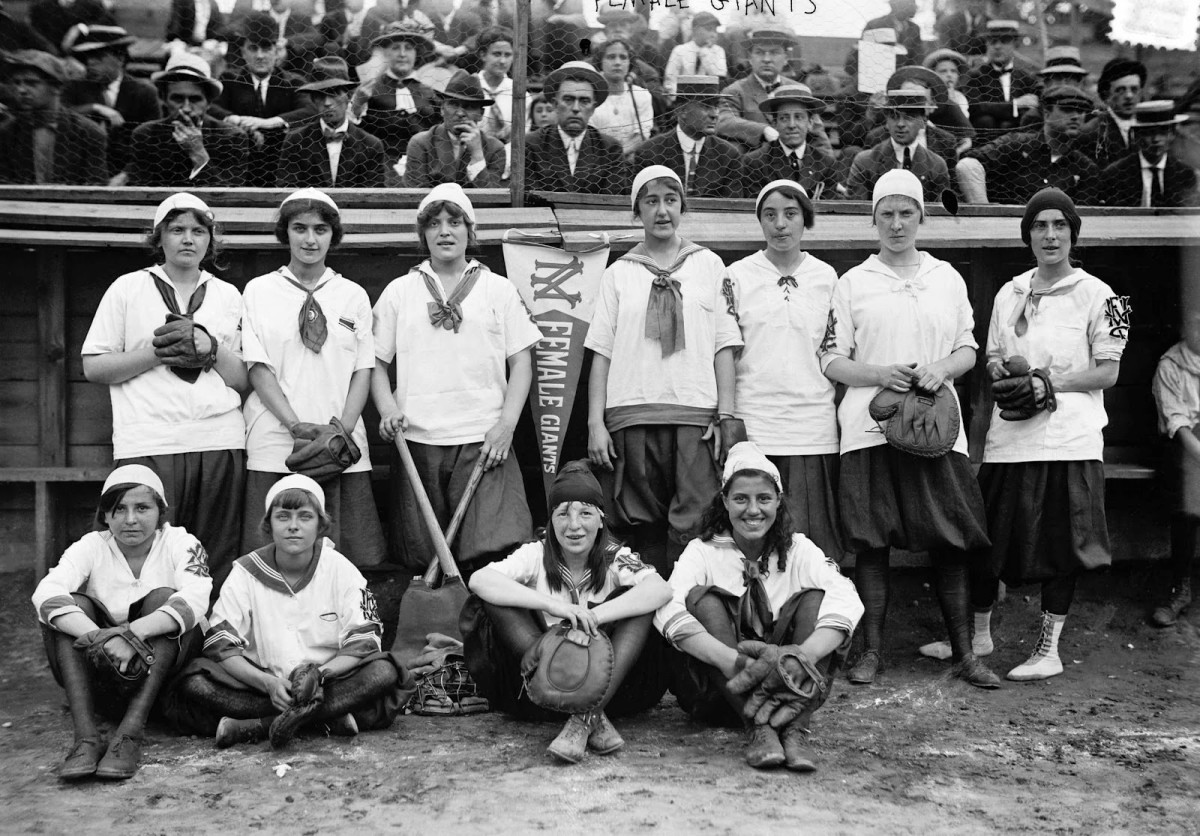

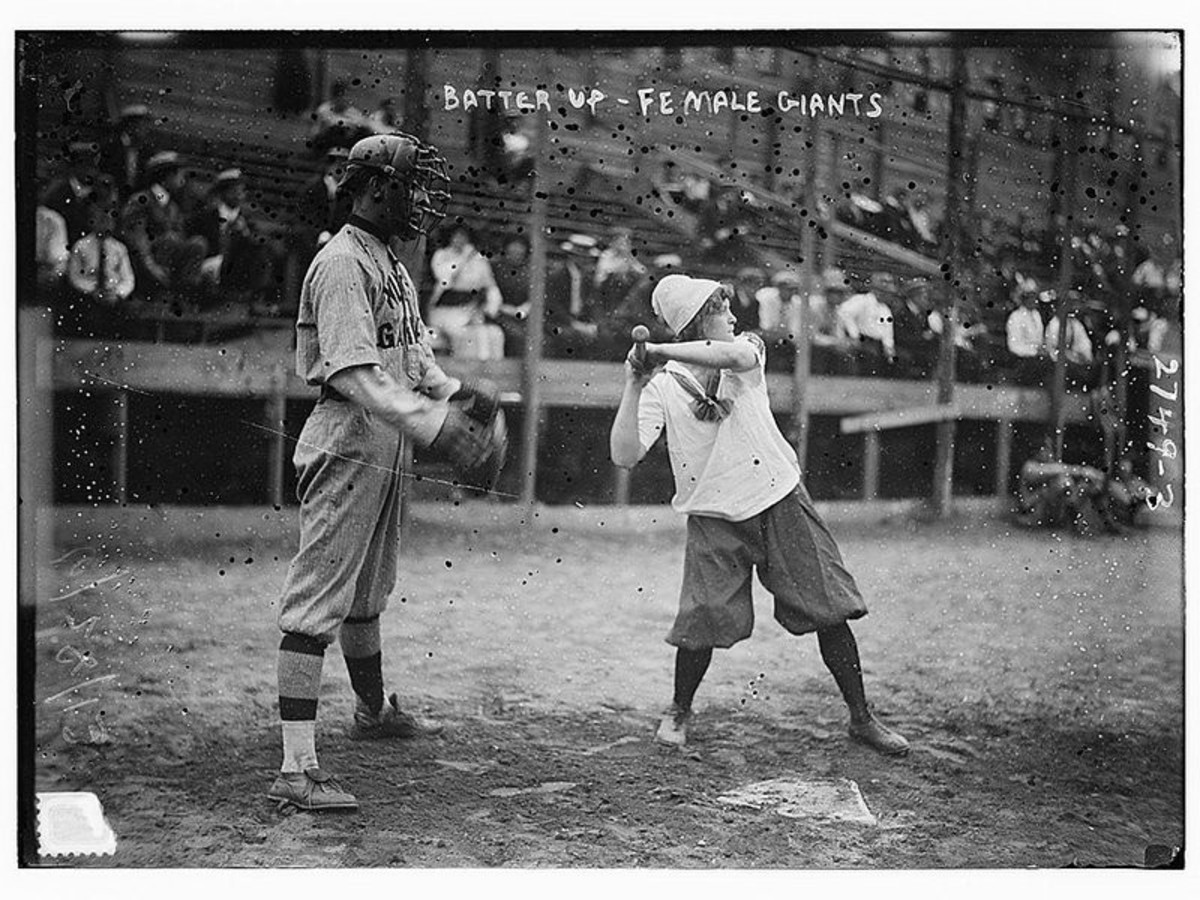
In 1913 Ida Schnall (1888–1973) organized a team for women who loved baseball. For most of them the team wasn’t about mounting a crusade for gender equality in sports—they just wanted to play ball. But to do so they had to overcome stiff opposition.
The New York Times of Tuesday, May 27, 1913, tells the story.
On the previous Sunday the New York Female Giants baseball team had held a practice game at the Lenox Oval, a sports field at Lenox Avenue and 145th Street in New York City. The 32 members of the team were divided into two opposing squads — the Reds vs the Blues. More than 1,500 spectators came out to watch the game.
It was the bottom of the 7th inning when it happened. The score was 3–2 with the bases loaded and two outs. But that’s where the game ended — no more baseball would be played on that field that day, and the Female Giants would end up in court the next day.
Why wasn’t the game completed? Because the police shut it down.
And it was all (they said) because of a nickel.
The Police Raid a Baseball Game!
The Giants third baseman, 17-year-old Helen Zenker, wasn’t playing that day and wasn’t in uniform. Instead, she was in the crowd handing out scorecards. She later said she never asked for payment, but some of the spectators gave a donation to help defray the expenses of the team.
Among those watching the game was a man named Mahoney. When Zenker gave him a scorecard, Mahoney gave her a nickel. The moment she accepted it, Mahoney whipped out his badge identifying him as a New York City police detective and went into action.
He, along with several other officers, ran onto the field to stop the game. He also issued Zenker a summons to appear in court the next day. The charge? Violation of Section 2,145 of the penal code: playing a sport for which admission was charged on a Sunday.
In other words, the Female Giants were accused of violating New York’s blue laws.
A Court Battle Over Women Playing Baseball
At the hearing, Helen Zenker was ready with her defense. Detective Mahoney swore under oath that she had told him that the scorecard would cost five cents. Zenker quickly made mincemeat of that claim:
“I asked for nothing. It is true that Detective Mahoney gave me a nickel; others did that. Some people even gave me 25 cents, and some 10 cents. This money, I want it understood, does not go to me: it goes to defray the expenses of the team. When I handed Detective Mahoney the score card I did not expect any payment. He proffered the nickel, and I took it, just as I took money from the others.”
She went on to explain that the team knew better than to charge admission for games played on Sunday. “Of course,” she added. “to see us play on week days will cost something.”
Although the Female Giants were charged with violating the city’s blue laws, it’s clear that the real issue was that they were a women’s team playing a man’s game.
“Not Guilty!”
The headline in the New York Herald about the incident said,
“Girls’ Baseball Team Beaten By Policeman”
But the Herald was wrong. The Female Giants weren’t beaten at all.
After listening to both sides in the hearing, the magistrate concluded that the charge just didn’t hold water. Declaring that there was insufficient evidence that admission had been charged for the Sunday game, he dismissed the case.
And the Giants went back to playing ball.
This may seem to have been just one of those rather silly incidents that happen when the officiousness of some person with a little authority gets out of hand. But Ida Schnall, the organizer and captain of the Female Giants, suspected something deeper.
The Sports Establishment Refused to Let Women Play Ball — or Anything Else!
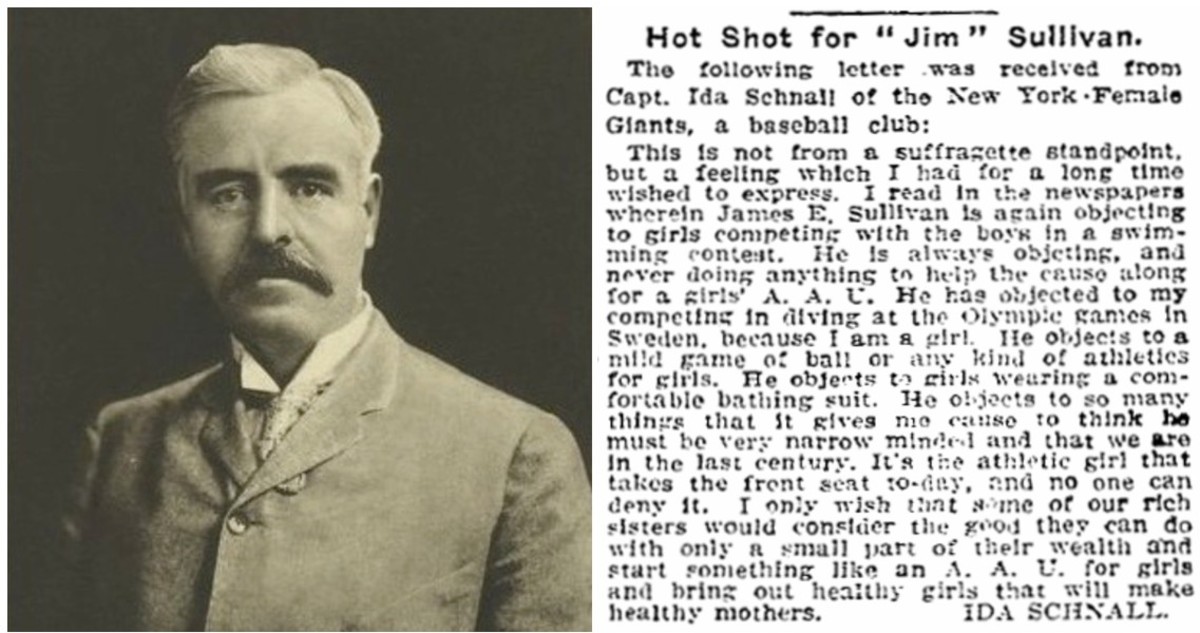
Ida Schnall was a crusader for women’s athletics, but had run into a brick wall in the form of James E. Sullivan, a founder (in 1888) and leader of the Amateur Athletic Union (AAU). Sullivan was a vigorous opponent of women’s participation in sports, as is clear from a resolution he sent to AAU committee members for their approval in January of 1914:
“Resolved: That the AAU does not and will not recognize the registration of women athletes and it is the sense of this committee that the rules were designatedly formed to include none but the male sex.”
Sullivan, from his position of power in the AAU, basically controlled amateur athletics in the U.S. And he wasn’t shy about using that power to impose his will.
For example, the Summer Olympics of 1912 allowed women to compete in swimming and diving competitions, but Sullivan vetoed participation by American women. The U.S. Olympic Committee followed his lead and refused to allow American women to compete.
Ida Schnall was a diver who had hoped to participate in the 1912 Olympics. She was bitterly disappointed by Sullivan’s attitude, and expressed her frustration publicly in a letter published in the New York Times on July 13, 1913:
“I read in the newspapers wherein James E. Sullivan is again objecting to girls competing against boys in a swimming contest. He is always objecting and never doing anything to help the cause along for a girls AAU. He has objected to my competing in diving at the Olympic games in Sweden because I am a girl. He objects to a mild game of ball or any athletics for girls. He objects to girls wearing a comfortable bathing suit. He objects to so many things that it gives me cause to think he is very narrow minded and that we are in the last century. It’s the athletic girl that takes the front seat today, and no one can deny it.”
It was against that backdrop that Schnall organized the New York Female Giants with the specific intent of furthering the acceptance of women as full participants in the world of sport.
She had directly confronted Sullivan on several occasions, both by telephone and in person at his office, and she strongly suspected that the police raid that landed the team in a New York courtroom had been instigated by him.
But Ida Schnall was nothing if not determined, and she refused to let Sullivan’s intransigence stop her.
Ida Schnall Puts the Female Giants on the Sports Page
Not only was Schnall a great athlete, but she was also a great promoter who knew how to put women’s sports squarely in the public eye.
For example, to publicize the Female New York Giants she managed to get Rube Marquard, star pitcher for the Major League New York Giants, to “work out” with her at the Polo Grounds. She made sure that reporters and photographers from all the city’s major newspapers were on hand to record the event, as Marquard bemusedly watched her pitch in a full-length dress, a huge hat, and shoes with heels.
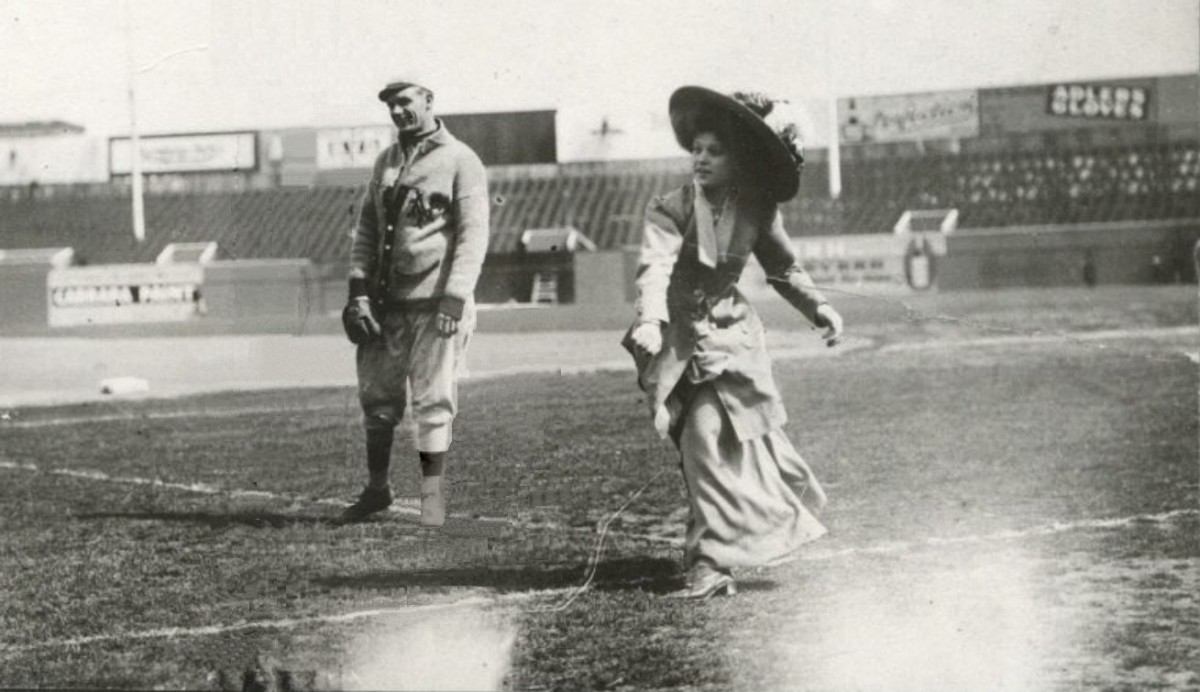
And she knew what she was doing — the photo of her and Marquard did indeed appear in all the newspapers.
The 1913 Female New York Giants were a success on and off the field, but Ida Schnall didn’t stop there.
James Sullivan’s opposition to women’s sports ceased with his sudden death in 1914. By 1915 Schnall, who was also an accomplished actress, was in Hollywood to star in a film for Universal Studios.
Building on her experience in New York, it was natural, if not inevitable, that Schnall organized a women’s baseball team at Universal. The Moving Picture Weekly took note, somewhat patronizingly, in its December 4, 1915, edition:
“Not the least surprising thing about it all is the ability shown by the applicants in a sport generally conceded to be without the ken of the fair sex.”
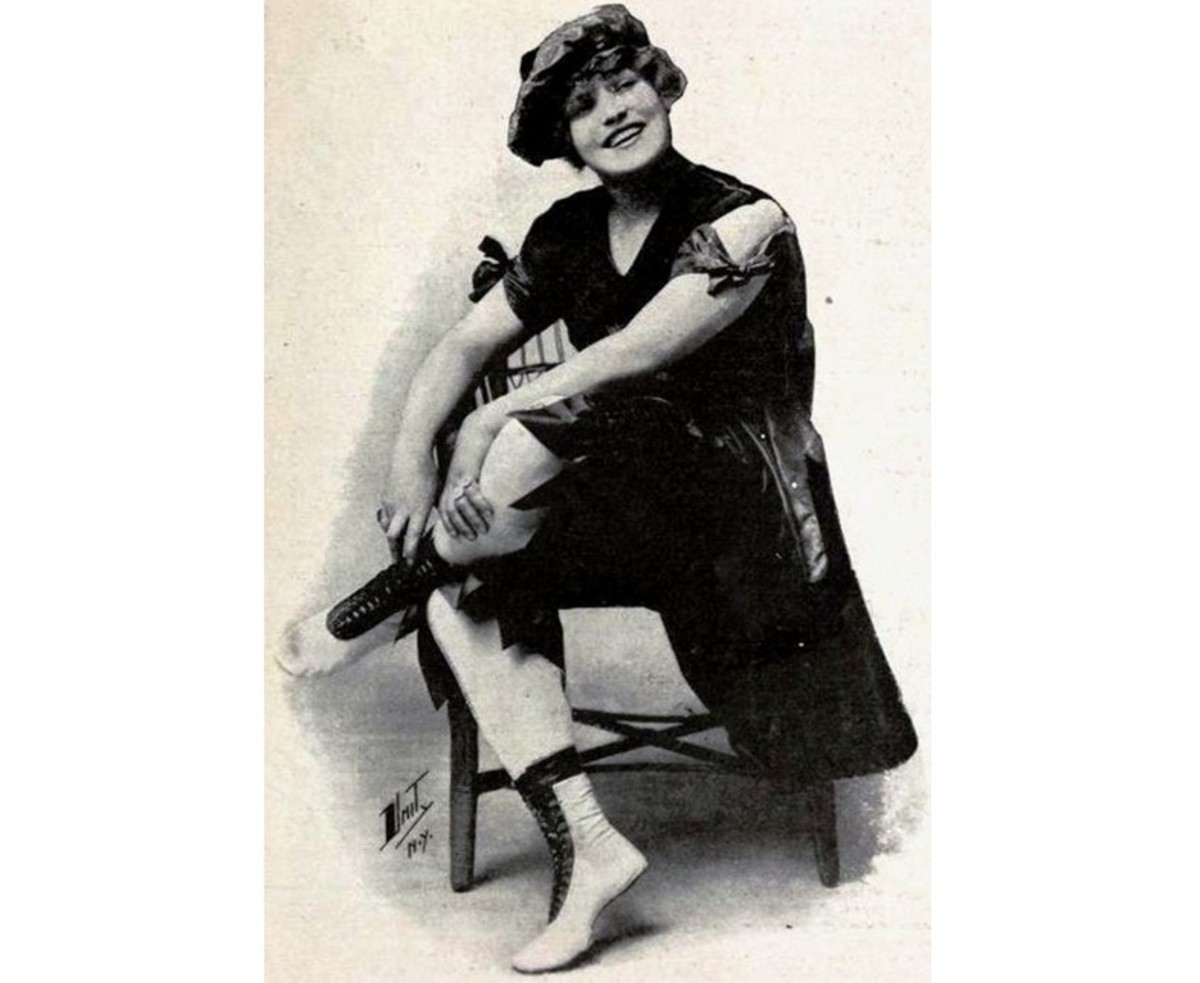
Source: Wikimedia (Public Domain)

Ida Schnall would continue to be a forceful advocate for women’s athletics for the rest of her life. Under her leadership the 1913 New York Female Giants made a powerful statement for gender equality in sports that still resonates today.
© 2023 Ronald E. Franklin